Best low light plants for apartments, and how to tell if your room qualifies
Most apartments have less light than people think. Learn how to judge your room honestly, which plants genuinely tolerate low light, and which ones are mislabeled.
Most plants sold as "low light" are not low light plants. They are plants that survive low light for a while before slowly declining. The distinction matters, because a plant that takes six months to fail teaches you nothing about what went wrong.
Before picking a plant, it is worth being honest about the room.
"Low light" does not mean "no light"
In plant terms, low light means indirect light with no direct sun — enough to read a book comfortably during the day without turning on a lamp. It does not mean a windowless bathroom, a hallway, or a shelf three meters from the only window.
No plant photosynthesizes in the dark. Low light tolerance means a plant can survive on less, grow slowly, and not complain. It does not mean it thrives there.
How to judge your room
Three quick checks tell you more than a guess.
- Window direction. South-facing windows give the strongest light, east and west give moderate light for part of the day, and north-facing windows give steady but weak light. In the southern hemisphere, reverse north and south.
- Distance from the window. Light drops off far faster than it looks. A spot two meters into the room can receive a small fraction of what a plant on the sill gets, even though both look "bright" to your eye, which adjusts automatically.
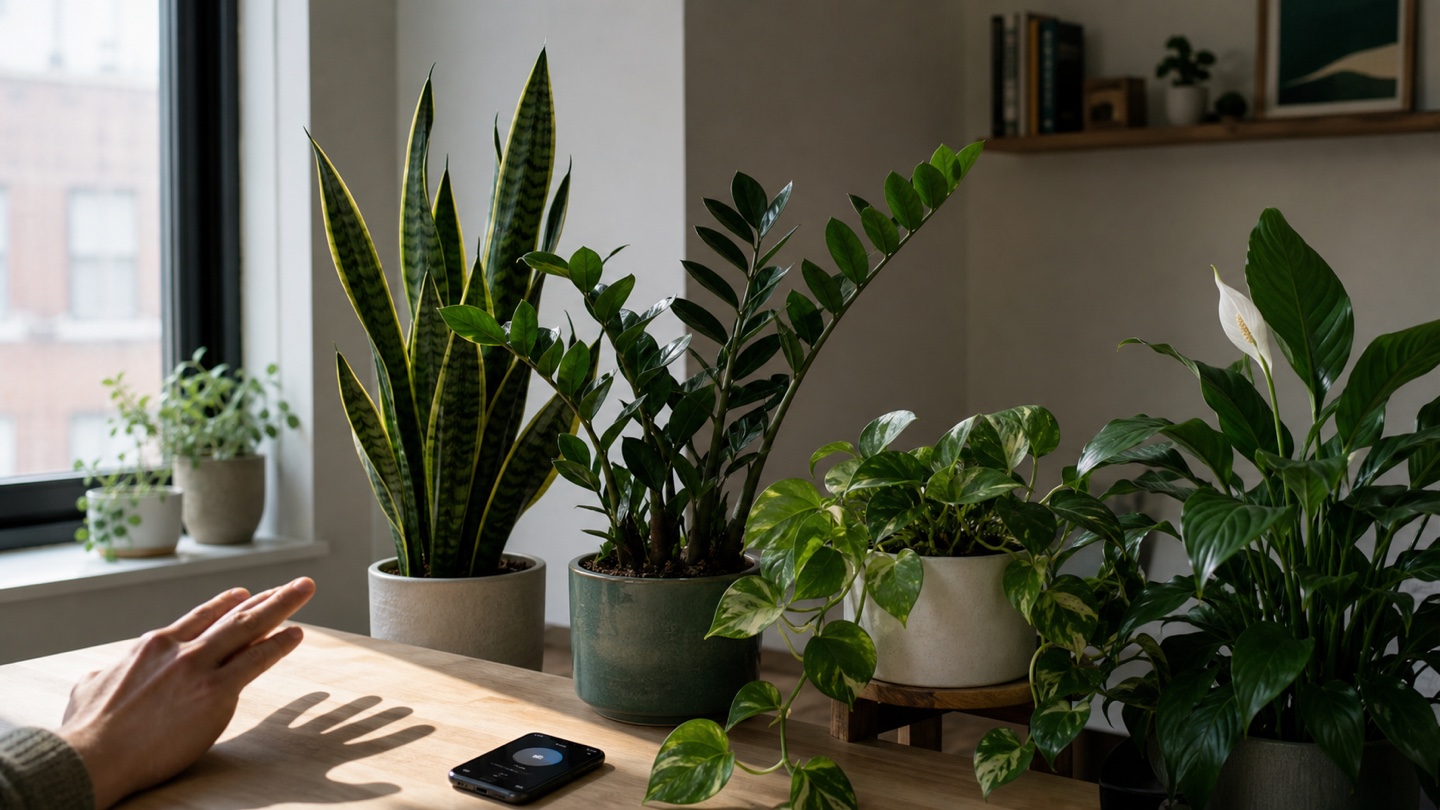
- The shadow test. At midday on a clear day, hold your hand a foot above the surface where the plant will sit. A sharp, dark shadow means bright light. A soft, fuzzy shadow means medium. A shadow you can barely make out means low light. No shadow at all means the spot is too dark for most plants.
Plants that genuinely tolerate low light
These handle a north window or a few meters back from a brighter one without visibly suffering.
- Snake plant (Sansevieria). The most forgiving option. Tolerates low light and infrequent watering, and its main risk is being watered too often.
- ZZ plant (Zamioculcas). Stores water in thick rhizomes, tolerates dim corners, and is difficult to kill through neglect.
- Pothos. Grows in low light, though variegated types lose their pattern and revert to plain green when light drops too far.
- Heartleaf philodendron. Similar tolerance to pothos, with slightly more forgiving watering needs.
- Cast iron plant (Aspidistra). Named for a reason. Slow, unfussy, and comfortable in genuinely dim spots.
- Chinese evergreen (Aglaonema). Handles low light well; the darker green varieties tolerate less light than the pink and silver ones.
- Peace lily. Tolerates low light and tells you clearly when it wants water by drooping, then recovering within hours.
Plants often mislabeled as low light
These are commonly sold for dim rooms and commonly fail in them.
- Fiddle leaf fig. Needs bright, consistent light. In a dim room it drops leaves from the bottom up.
- Most succulents and cacti. They come from open, sun-exposed environments. In low light they stretch, pale, and go soft.
- Calathea and maranta. They tolerate lower light, but their real requirement is humidity and consistent moisture, which is a different problem entirely.
- Alocasia. Wants bright indirect light and high humidity. Low light usually means a slow decline and pest problems.
- Monstera. Survives in medium light but stops producing the split leaves people buy it for.
What changes when light is low
Moving a plant to a dimmer spot changes more than growth rate.
- Water much less. Less light means less water use. The most common way a low light plant dies is root rot, not darkness.
- Expect slow growth. A few new leaves a year is normal, not a sign something is wrong.
- Skip most fertilizer. A plant that is barely growing cannot use it, and the excess builds up as salt in the soil.
- Wipe the leaves. Dust blocks a meaningful share of already-scarce light. A damp cloth every few weeks helps more than it sounds like it should.
- Rotate the pot. A quarter turn every few weeks keeps growth from leaning permanently toward the window.
Check the spot before you buy the plant
The mistake worth avoiding is buying first and finding a spot afterwards. Decide where the plant will live, assess that spot, then choose a plant that matches it.
Planture is useful on both sides of that decision. The Light Meter gives you a reading on the spot you are considering instead of a guess. Plant ID identifies a plant in the shop before you buy it, so you can check its light and watering needs against the room you have in mind, and save it to a wish list in Plantures if the fit is wrong for now. Once the plant is home, its profile keeps the light and watering guidance next to the reminders you set — which matters most for low light plants, where the correct instinct is usually to do less.