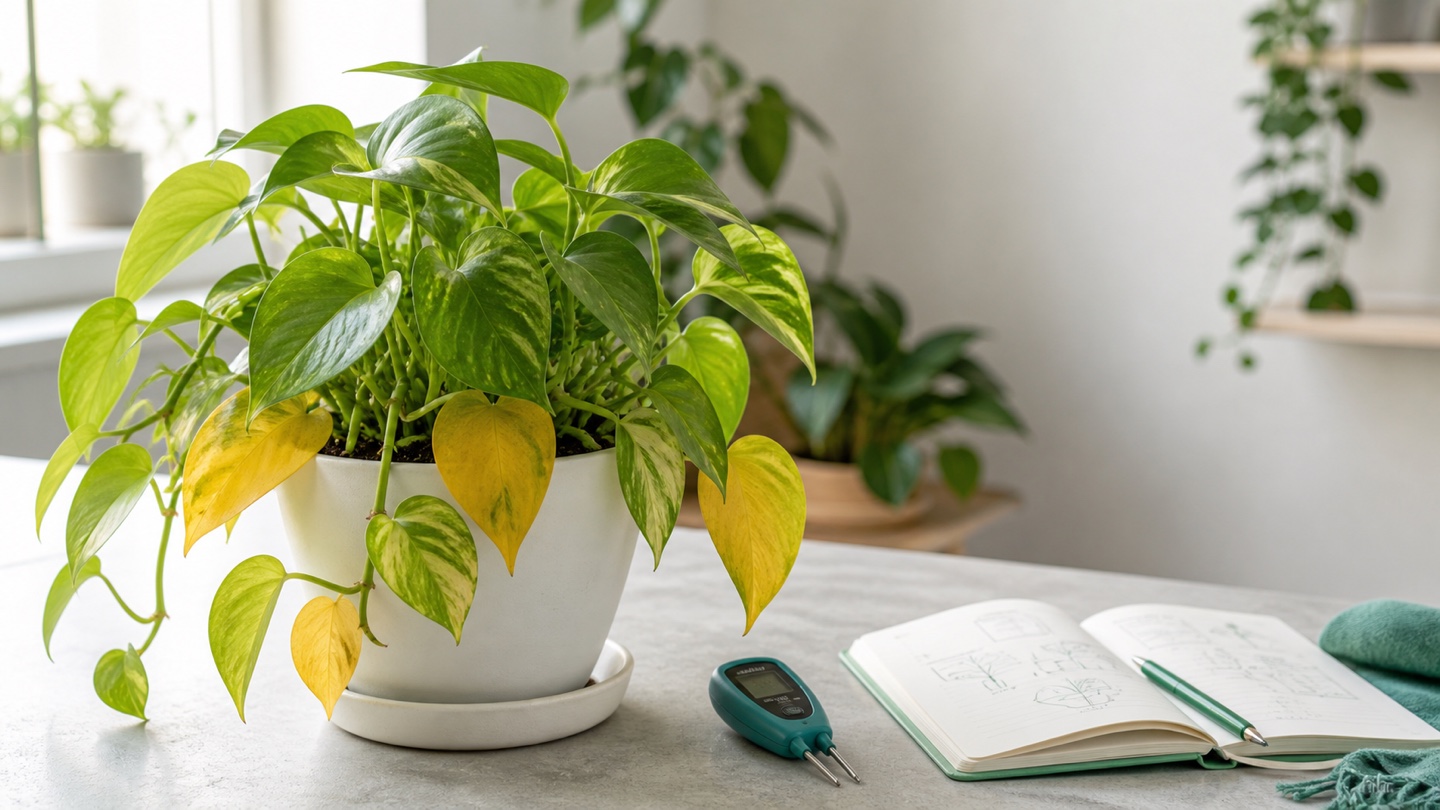
Why are my plant leaves turning yellow?
Yellow leaves are a symptom, not a diagnosis. Learn to read the pattern, tell overwatering from underwatering, and decide what to change first.
Yellow leaves are the most common reason people start worrying about a houseplant. They are also the least specific symptom a plant can show. Water, light, nutrients, temperature, and simple aging can all produce the same color change, which is why guessing usually leads to the wrong fix.
The useful question is not "why is my plant yellow" but "which leaves are yellow, and what changed recently."
Read the pattern before you change anything
Where the yellowing appears narrows the cause faster than the color itself.
- Lower, older leaves only. Often normal aging, or the plant redirecting resources to new growth. One or two lower leaves yellowing slowly is rarely an emergency.
- New growth at the top. More likely a nutrient or root problem, since the plant is failing to support the tissue it cares about most.
- All over, fairly evenly. Usually a watering or light issue affecting the whole plant.
- Yellow edges with a dry, brown rim. Points toward underwatering, low humidity, or salt buildup from fertilizer.
- Yellow with soft, limp leaves. Points toward too much water and roots that cannot breathe.
Overwatering and underwatering look alike
This is the trap. Both make leaves yellow and droop, so people water a drowning plant or let a thirsty one dry out further.
The difference is in the soil and the feel of the leaf:
- Overwatered: soil stays damp several days after watering, leaves feel soft or mushy, yellowing often starts low and spreads, and the pot may smell sour. The pot may have no drainage hole.
- Underwatered: soil is dry well below the surface, leaves feel thin and papery, edges crisp before they yellow, and the whole plant perks up within hours of watering.
Check the soil two knuckles deep before deciding. Surface dryness tells you very little.
Light is the quiet cause
A plant in too little light will gradually shed lower leaves to sustain itself, yellowing them on the way out. A plant moved into direct sun can bleach to a pale yellow in patches, usually on the side facing the window.
Both cases share a clue: something changed. A new apartment, a rearranged room, or the seasonal drop in daylight is often the real trigger, even when it happened weeks earlier.
Nutrients, roots, and time
If watering and light are stable, look further:
- Nitrogen shortage shows as broad, even yellowing that starts with older leaves. Common in plants that have sat in the same soil for years.
- Root-bound plants cannot take up water or nutrients, no matter how correct your routine is. Roots circling the drainage hole are the giveaway.
- Recent repotting or a move causes temporary yellowing while the plant adjusts. Give it two to three weeks before intervening again.
- Cold drafts or a heat vent stress a plant into dropping leaves, often on one side only.
Change one thing at a time
The most common mistake after spotting yellow leaves is fixing everything at once: new pot, new soil, more water, fertilizer, new spot. When the plant recovers, you learn nothing. When it declines, you cannot tell which change hurt it.
Pick the single most likely cause based on the pattern, change only that, and give it two weeks. Remove fully yellow leaves — they will not turn green again — but leave partially yellow ones, since the plant is still pulling resources from them.
Turn the answer into a routine
A single yellow leaf is a data point. A pattern over months is a diagnosis, and that is where most people lose the thread — the symptom is remembered, but the timing and the conditions around it are not.
This is the part Planture is built for. Diagnose takes a few angles of the plant instead of one close-up, so the symptom is assessed in context, and the result is saved. The Water Meter and Light Meter give you a reading on the two causes behind most yellowing. Reminders keep watering on an interval you set deliberately rather than by memory. And because scans, notes, and completed care stay in the plant's history, the next time leaves start yellowing you can look back at what the plant was doing the last time it happened.
Most plants do not fail suddenly. They fail slowly, in a pattern that is obvious in hindsight and invisible without a record.